Subfloor & Foundation Leveling
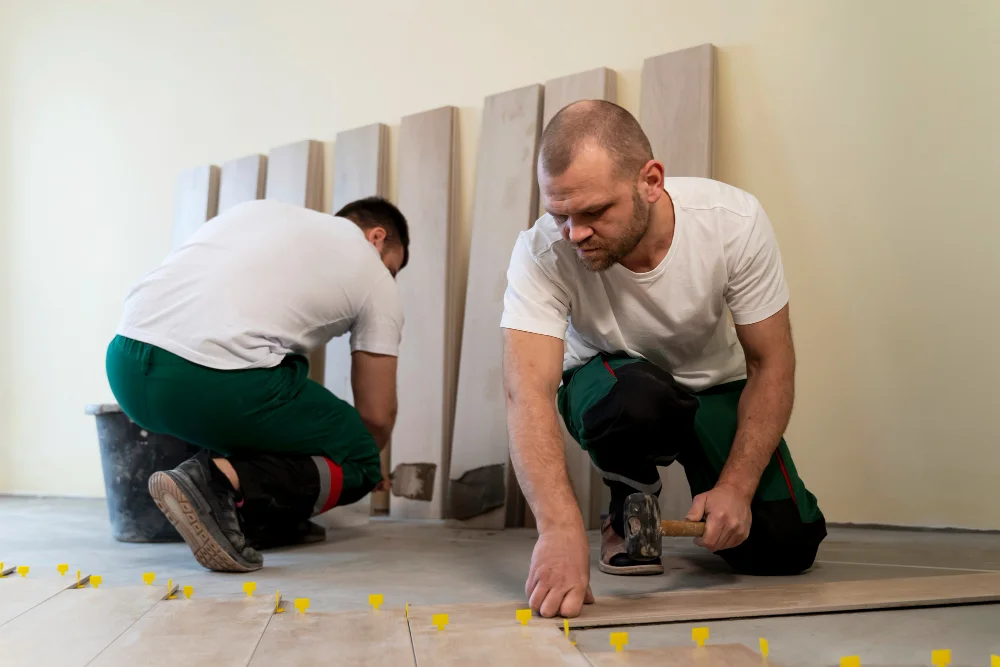
The work nobody sees is the work that matters most. We check and correct subfloor level before any new floor goes down — the single biggest factor in whether it lasts.

The invisible work that decides everything
East Texas ground moves. Expansive clay soils swell and shrink with rainfall, and older pier-and-beam foundations settle over decades. A new floor installed over an unlevel or unstable subfloor will telegraph every one of those problems — squeaks, gaps, cracked tile, cupped boards — usually within a year or two.
We check subfloor level against the industry-standard 3/16" per 10 ft flatness tolerance before installing any new flooring, and correct what needs correcting — screeding, shimming, or repairing damaged subfloor — so the floor above it stays flat and sound.
Every leveling job includes
Level assessment
Checked against the 3/16" per 10 ft industry flatness standard.
Screeding & shimming
Correcting minor unevenness before installation.
Subfloor repair
Replacing water-damaged or structurally compromised subfloor.
Moisture testing
Checked ahead of any moisture-sensitive flooring install.
Built for East Texas clay and old foundations
Anderson County and much of the surrounding region sit on expansive clay soils that shift with the seasons, which is a leading cause of uneven floors in both new and older homes here. We don't just paper over an unlevel subfloor with more flooring material — we address the level itself, so the fix actually holds as the ground continues to move.
For older pier-and-beam homes, leveling sometimes means addressing the piers and joists themselves, not just the subfloor surface. We'll tell you honestly if a problem goes deeper than a straightforward screed-and-level job.

Leveling & prep services
Matched to your foundation type and the flooring going on top.
Self-leveling underlayment
For minor unevenness ahead of tile or LVP.
Screeding & shimming
Correcting subfloor irregularities before installation.
Subfloor replacement
Removing and replacing damaged plywood or original subfloor.
Moisture barriers
Installed ahead of wood or moisture-sensitive flooring.
Pier & joist assessment
For older homes where the problem starts below the subfloor.
Crack-isolation membranes
Protecting tile from minor slab movement.
How do I know if my subfloor needs leveling?
Visible slopes, squeaks, or floors that feel bouncy are common signs — but the only reliable way to know is a level check, which we include as part of every estimate before installing new flooring.
What's the industry flatness standard?
3/16 of an inch of variance per 10 feet is the widely used flooring-industry benchmark. We check against that standard and correct anything outside it before installing.
Can you fix an unlevel floor without replacing the flooring above it?
Sometimes, if the existing floor covering can be lifted and relaid. Often, leveling work happens as part of a new installation, since accessing the subfloor usually means removing what's currently down.
Is this really necessary, or can we skip it?
Skipping subfloor prep is the single most common reason a new floor fails early — cracked tile, gapped hardwood, or a spongy feel underfoot. It's not an upsell; it's the work that makes everything else last.
Explore related services
Heartwood Hardwood Flooring
Solid and engineered hardwood, including regional heartwood species.
Learn more →Historic Floor Restoration
Refinishing and board-matching for older East Texas homes.
Learn more →
Reclaimed & Custom-Milled Timber
Heritage timber sourced and milled to your specifications.
Learn more →Request a Site Evaluation
Tell us about your project and we'll get back within one business day — no obligation.
Call or Text
Free Site Evaluation
No pressure — we'll walk the space and give you a straight answer.